

Property Lawyer in Valencia
Legal due diligence for apartment, house and villa purchases in Valencia, from our Jávea office and our associated firm in the city.
Buying a property in Valencia is straightforward when the paperwork is clean. What decides a purchase is not in the listing: it is in the minutes of the community of owners, in the town hall’s files and in the Land Registry, and it has to be read before you sign, not after.
For matters in Valencia we work from our office in Jávea together with our associated firm in Valencia, so you have Spanish lawyers where the property is and a single point of contact who deals with you in your own language. And we are genuinely independent of the sale: we do not act for estate agents, developers or sellers, and we are not paid by them. Our only client in the transaction is you.
The cityValencia’s areas, one by one
Every part of Valencia raises its own questions. We know which ones to ask because we deal with them regularly.
- Ciutat Vella and the historic centreBuildings of real age, often listed or protected, where the questions are whether earlier alterations were licensed, whether two flats joined years ago are still two on the register, and what the protection allows you to change.
- The Eixample: Ruzafa, Gran Vía, Pla del RemeiEarly-twentieth-century blocks with communities of owners that have voted, or are about to vote, works on façades, roofs and lifts. The minutes of the community decide what you inherit.
- The seafront: Malvarrosa, Patacona, CabanyalProperty near the shore, where the Coastal Law and the demarcation line can affect what may be altered, and where the older houses of the Cabanyal carry their own planning history.
- The outskirts and the metropolitan areaHouses and villas on larger plots, where the classification of the land decides what may be built, extended or rebuilt, and where what stands on the plot does not always match the deed.
- New-build and off-planDevelopments bought before completion, where every payment on account must be covered by a bank guarantee in your name for the full amount, and where the developer’s contract is negotiable more often than buyers assume.
Legal due diligenceWhat we check before you sign
This is our work as lawyers: documents, registries and public administrations. It is done before the private contract, not after.
- TitleThe Land Registry and the Cadastre against the deed: who owns the property, what surface is registered and whether the two descriptions match — and, in older buildings, whether flats joined or divided years ago are still registered as they were.
- Licences and infringementsThe building licences on file at the town hall, the certificate that no planning infringement is pending, and whether a declaration of new build is needed for anything added later.
- Planning and protectionOutside the city, the classification of the land and what it allows; in the centre, whether the building or its façade is protected and what that protection permits.
- The community of ownersThe administrator’s certificate that fees are paid, and the minutes of recent general meetings: works already voted on the façade, the roof or the lift are a liability waiting for whoever owns the flat when they fall due.
- Charges and debtsMortgages, embargoes, community debts, IBI and utilities, so that nothing is inherited with the property.
- Who is sellingIdentity and capacity of the seller, marital regime, inheritances not yet registered, company representation and powers of attorney.
Technical inspectionWhat we advise you to have an architect check
Some things are not in any registry. On a house or villa purchase, and on any flat in an older building, we advise a prior inspection by an architect, in addition to the legal checks.
- What is builtWhether the house, pool, annexes and terraces — or, in a flat, enclosed terraces and altered layouts — match the deed and the licences.
- BoundariesOn a house, whether the fenced boundaries match the registered plot.
- Structure and installationsThe condition of the structure, the roof and the installations and, in older buildings, whether the building’s periodic technical inspection is up to date.
- Year of constructionThe real age of each part of the building, which decides what can still be regularised.
You choose and instruct the architect directly: your own trusted architect or, if you do not have one, an independent practice we can suggest. We then read the architect’s report alongside the deed and the Land Registry, so that what you pay for, what is registered and what is built are one and the same thing.
ExamplesWhat this looks like in practice
Situations of the kind we deal with regularly, described in general terms. They run from the more modest purchase to the larger one, because the same checks apply at every level.
- An apartment in Ruzafa, €450,000. The registry entry was clean and the contract was straightforward. The community minutes were not: the owners had already voted a levy for the renovation of the façade, approved but not yet called in. The amount was agreed as a retention from the price at completion, so the buyer paid what the apartment was worth net of a liability that already existed on the day she first saw it.
- An apartment in the Eixample, €600,000. The seller had inherited the property and the inheritance had never been registered in his name. He was the rightful owner and there was nothing improper about it, but he could not have given clean title on the date the parties had agreed. The registration was completed first and the timetable in the contract was written around it.
- A flat in a historic building in Ciutat Vella, €800,000. Two smaller flats had been joined years earlier. The home the buyers had visited was one property; on the register it was still two, and the works had never been declared. We held the transaction at the private contract stage until the position was regularised, which protected the buyers from inheriting a problem that would have surfaced again the day they came to sell.
- A house on the outskirts of the city, €1 million. The plot was larger than the house needed, and part of it was classified in a way that limited what could lawfully be built on it. The buyer had been planning a pool and a guest annexe. He went ahead knowing exactly what the land permitted, and priced the purchase accordingly, rather than finding out after completion.
- A new-build purchase from a developer, €1.5 million. Payments were being made on account before completion. The bank guarantee covering those payments existed, but had been issued for an amount lower than what the buyer had already transferred. Further payments were stopped until the guarantee was corrected and reissued in the buyer’s name for the full sum.
- A penthouse in the centre, €2 million. There was a mortgage still charged on the property and an embargo noted on the register from an unrelated matter. Both were capable of being cleared, and both were cleared — but only because the zero-balance certificate and the cancellation were arranged to take effect at the signing itself, rather than left as an undertaking to be honoured afterwards.
- A villa in the residential area outside the city, €3.6 million. The registered surface of the house did not correspond to what had been built; a substantial extension had never been declared. The purchase proceeded once the position was regularised and reflected in the deed, which protected the buyers’ ability to sell it on later without the same issue arising against them.
They guided me expertly through a property purchase, showing deep knowledge of Spanish law, attention to detail, and clear communication throughout. Reliable, efficient, and trustworthy.★★★★★Lisa Damen · Google review
Buying through a company
Some buyers hold a Spanish property through a non-resident company, usually for succession or privacy reasons. It can make sense, and it can be an expensive mistake. It changes how the purchase is taxed, how the property is later sold, how it is inherited and what has to be declared each year. We tell you plainly which of the two applies to your situation before you decide, not after.
Succession
Under the European succession regulation (EU Regulation 650/2012), you may be able to choose the law of your nationality to govern your estate. For a buyer from Germany, the Netherlands, Belgium, the United Kingdom or the United States, that choice, and how your Spanish will is drafted alongside your home-country will, decides what happens to the property and what your heirs will pay.
How we work
We are independent lawyers. We do not act for estate agents, developers or sellers, and we are not paid by them. For matters in Valencia we work from our Jávea office together with our associated firm in Valencia. The great majority of our purchases are completed without the buyer travelling to Spain: with a power of attorney, we handle the process through to signature at the notary. We reply within 24 hours.
For our Valencia practice more generally, see our English-speaking lawyers in Valencia page; for signing from abroad, our power of attorney in Valencia page.
With a power of attorney we complete every step on your behalf, from the first check to signature at the notary, remotely and safely.
Call +34 607 320 768The lawyers who will handle your purchase

Conveyancing, Inheritance and Donations · Admitted to the Valencia Bar in 1992 (no. 6407) · Alicante Bar no. 9382

Marital and Family Law · Valencia Bar no. 12075

Civil Law · Valencia Bar no. 6041

Inheritance, Conveyancing and Contract Law · Valencia Bar no. 7773
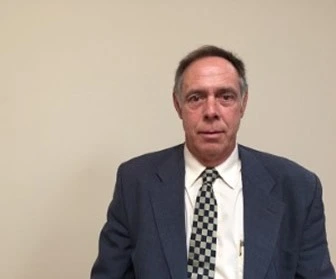
Conveyancing, Inheritance and Matrimonial Law · Alicante Bar no. 3607

Civil and Insurance

Inheritance, Conveyancing and Civil Law – Dénia · Alicante Bar no. 3699

Inheritance, Conveyancing and Civil Law – Dénia · Alicante Bar no. 3374
Selling a property? See Selling a high-value villa on the Costa Blanca — what we get ready before a property goes on the market.
Disclaimer. The information on this page is general in nature and does not constitute legal advice. Every property and every transaction is different, and the applicable rules may change. No decision should be taken on the basis of this page alone without obtaining advice on your specific case. Tomas Ballestero Lawyers accepts no liability for actions taken in reliance on this general information.
Ready to talk about a property in Valencia?
Tell us which property you have in mind. We reply within 24 hours.
Talk to us about a propertyor call +34 607 320 768